Avani Matha Succession

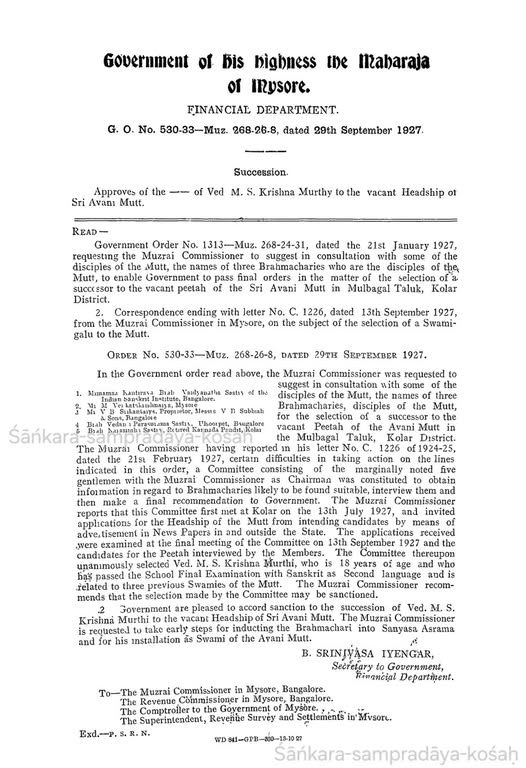
The Mysore Government adopted a systematic approach to select a qualified successor to the Avani Peetham from its eligible disciples, strictly in line with the ancient traditions and customs of the Matha and in accordance with the Rules of the Muzrai Department governing succession.

Upon selection, the new Swamigalu was provided advanced religious education and training similar to the arrangements made for the young Swami of the Shivaganga Matha.

A committee of scholars and eminent persons periodically visited the Matha to observe his progress, and the Government further sought the guidance of Mahamahopadyaya Shri Virupaksha Shastri to assess and advise on his training.

This stands as a classic instance of the Maharaja of Mysore discharging his paramount duty to protect an ancient Matha and its parampara, without outsourcing the same to any other external denomination.
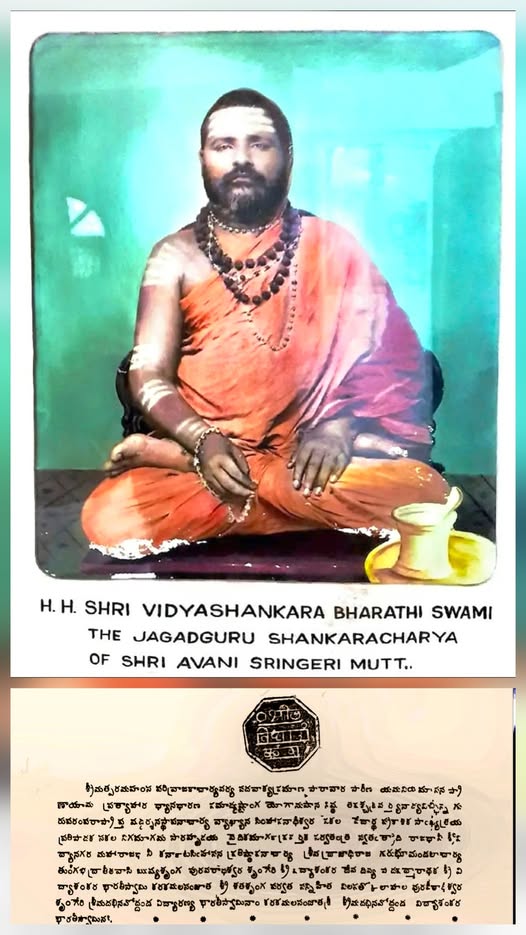
Avani Sringeri Matha

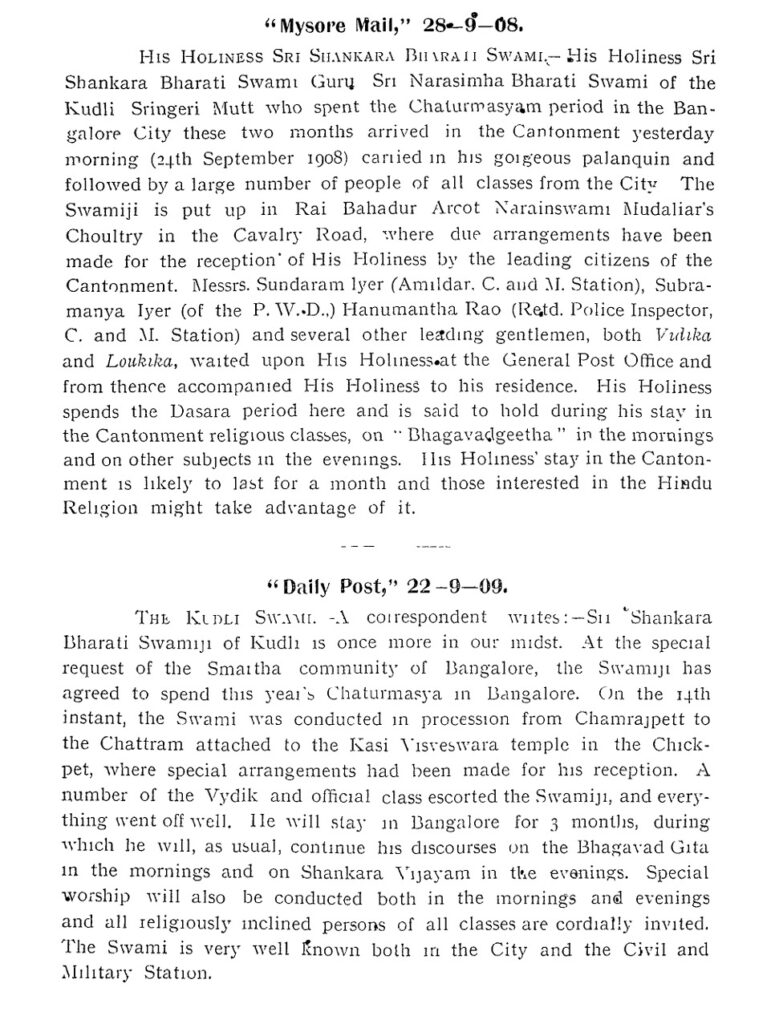
Traditionally, the Avani Sringeri Matha was treated as an Independent Religious Institution by the Mysore Government.

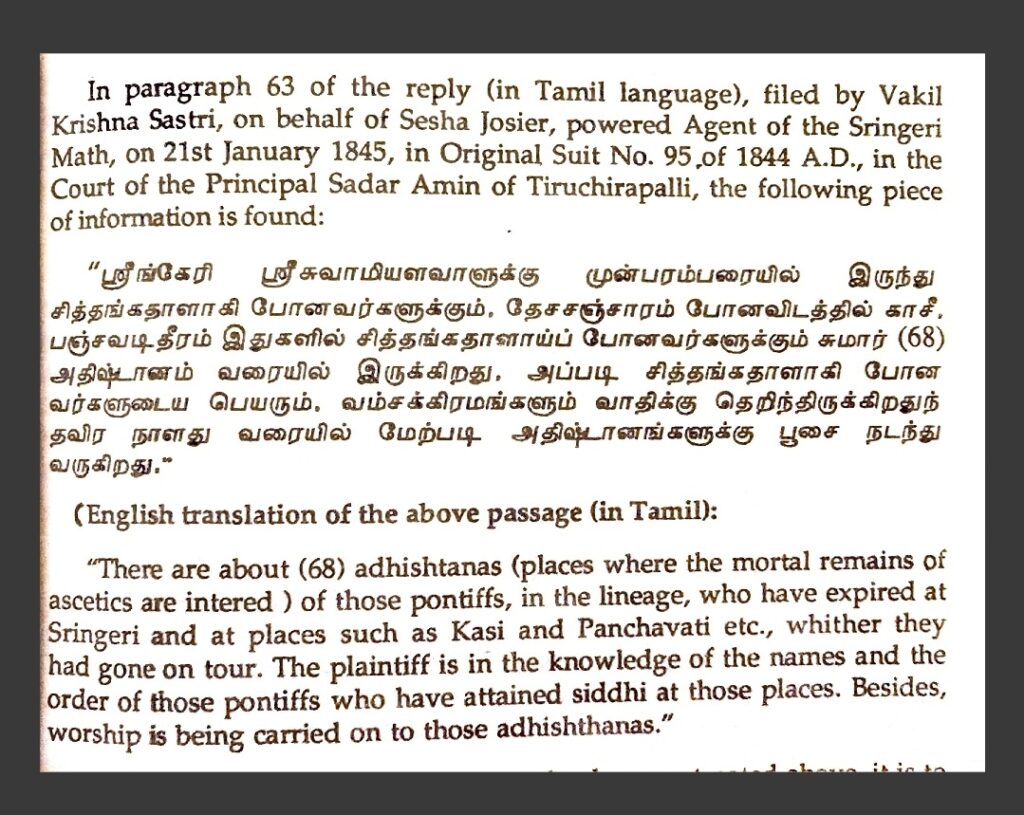
Official records of Avani Sringeri Matha reveal that it has followed its own lineage, cultural & religious tradition since ancient times and was never a branch of any other Matha. Even in 1927, the Government considered the succession to the Peetha only from among the disciples of Avani Sringeri Matha or its denomination.

This document also shows how the Mysore Maharaja consciously safeguarded the autonomy of the Avani Sringeri Matha by ensuring that the process of succession was not delegated to any other religious institution, thereby preventing any external Matha from asserting a permanent right of control or appointment over the successor.

Any attempt to label an independent Matha as a shakha or subordinate of another institution directly violates Article 26 of the Constitution of India, which protects the Independent Existence and Self-Governance of Religious Denominations.

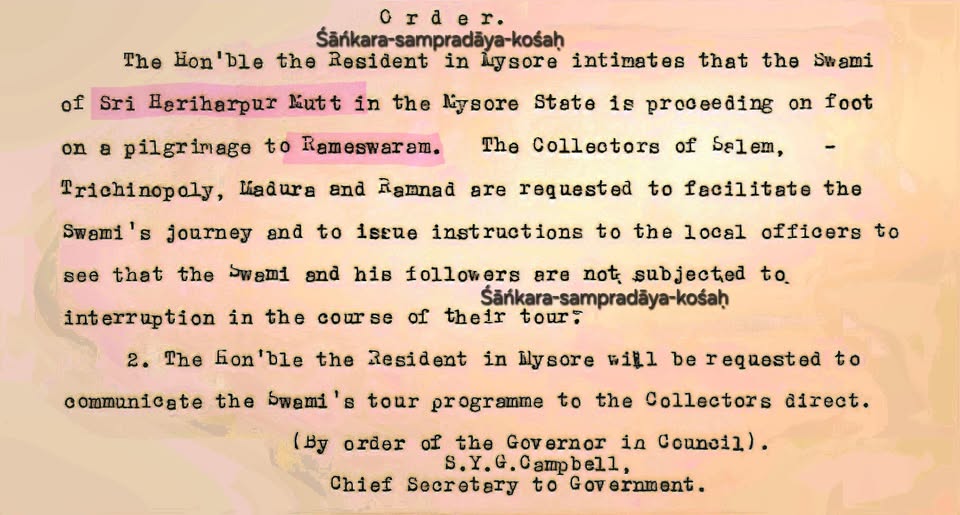
The 1926 Rameswaram Vijaya Yatra of Jagadguru Shankaracharya of Hariharapuram Matha

This Rahadari order dated 19 June 1926, issued by the Government of Madras, records the Vijaya Yatra of Jagadguru Shri Shankaracharya Swami of Hariharapuram Matha to Rameswaram. It directed the district authorities to facilitate the journey and ensure that no obstruction was caused to the Swami and His followers.

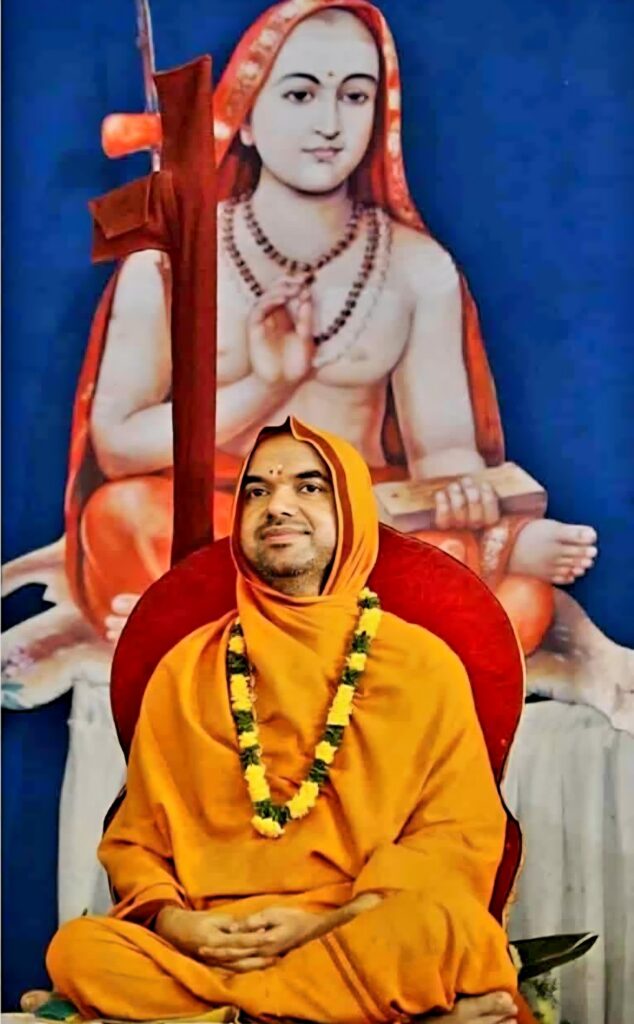
Birudavali of Shri Ramachandrapuram Matha :

Srimat Paramahamsa Parivrajakāchāryavarya – Chief Acharya of the Paramahamsa Sanyasis,

Padavākya-Pramana Pārāvāra Pārina – Who has been to the farthest point of grammar, philosophy and logic,

Yamaniyamāsana Prānāyāma Pratyāhāra dhyāna dhārana Samādhyaştanga Yogācharana niruta – Engaged in the performance of eight-fold yoga consisting of restraint, control of passions, sitting in different postures, control of breath, withdrawing the mind from external objects, meditation, control of mind and absorption of the mind in God,

tapahśchakravarti – An Emperor of Austerities,

anādyavicchinna guruparamparāprāpta – A lineal descendent of the gurus from time immemorial without break,

Sakala nigamāgama Sārahridaya Sānkhyatrayapratipādaka – Teacher of the inner truth and essence of all vedas and agamas and the three sankhyas,

Vaidikamārga Pravartaka – Establisher of the vedic doctrine,

Saravatantra Svatantra – Master of all the tantras,

ādirājadhāni Vidyānagara Mahārājadhāni – Vidyānagara, the first-great capital,

Vaibhava Simhāsanādhiśvara (Lord of the renowned throne,

Vyākhyāna Simhāsanārūda – seated on the Vyakhyana Simhāsana, throne of scripture,

Srimadrājādhiraja guru – Preceptor of the kind of kings,

Gokarna Mandalāchārya – Preceptor of Gokarna Mandala,

Śrimachhataśrunga Purvarādhiśvara (lord of Śringapura,

Śrimachhrāvati Tirvāsā – Resident on the bank of the river Sarāvati,

Śrīrāmachandra Pädapadmarādhaka- worshipper of the lotus feet of Sri Ramachandra.

(Source: Sri Ramachandrapuram Math : Its History And Antiquities By Research Scholar T.S. Halemane, 1999.)

Date of Vidyashankara Temple – Amita Kanekar

Although the Vidyashankara temple is commonly assigned to the14th century, Amita Kanekar’s architectural study shows that such an early date is inconsistent with its design which clearly points to a later period.

The temple’s core structure is firmly in the Dravida (Tamil) style, with pillars and hall elements characteristic of the Keladi Nayaka and Vijayanagara tradition of the 16th century. However, the Hoysala-looking exterior is a conscious archaic revival, not an actual work of the Hoysala-era. There is no Bijapur Sultanate influence in its construction.

All these would confirm that the Vidya shankara temple at Tunga Sringeri was erected before the post-1565 rise of Bijapur architecture.Therefore, the 14th century dating is incorrect.

According to Kanekar, the temple was almost certainly built under the Keladi (Ikkeri) Nayakas in the 1500s.

for further study:

https://easaa.org/wp-content/uploads/2023/01/Amita-Kanekar-5.pdf

Date of Shri Vidyaranya …1

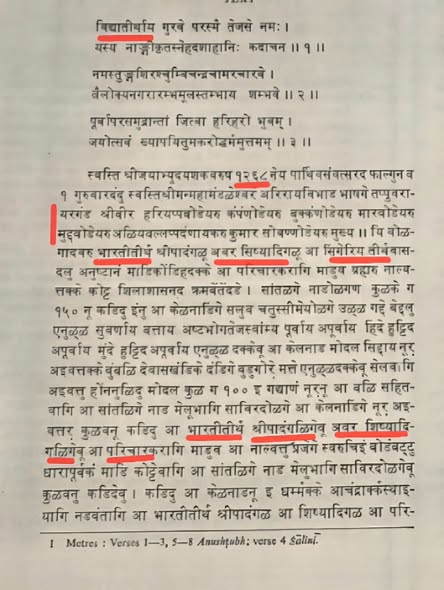
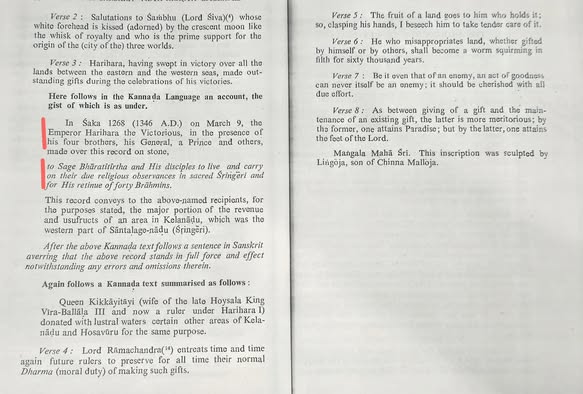
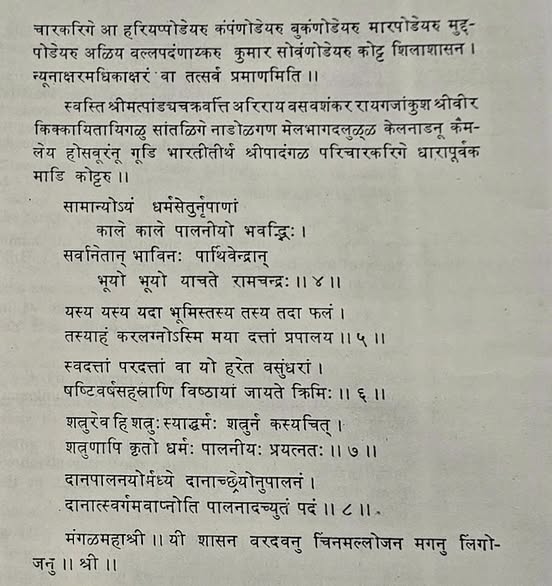
The 1346 C.E. inscription of Emperor Harihara I, recording a land grant to Shri Bharati tirtha Shripada, names only Shri Vidyatirtha and Shri Bharati tirtha, but does not mention Shri Vidyaranya at all.

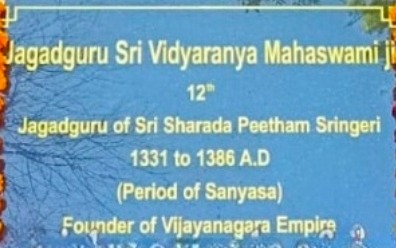
If Shri Vidyaranya had indeed become an ascetic by1331 C.E., his name would have been mentioned in the very first royal grant record at the sacred (Tunga)Sringeri tirtha.

Hence, the oft-repeated date 1331 C.E. for Shri Vidyaranya’s initiation need not be accepted as historically correct.